Tips and Tricks for the Best Beef to Smoke

The best beef to smoke, whether it’s a juicy hunk of brisket, flavor packed tri-tip, ribs so tender the meat falls off the bone, or shredded chuck roast, is about using time, temperature, and smoke to add flavor and texture.
As a diehard smoker for almost 30 years, I’ve collected our best tips, tricks, and recipes to help cooks choose the right beef cuts to smoke and pair them with the proper technique.
In this piece, I break down which cuts of beef are worth smoking, along with time, temperature, and seasoning recommendations. Our Smoked Beef Time and Temperature Chart is a great resource if you just need a quick time or temperature.
What Makes the Best Beef to Smoke
People smoke beef because it adds a rich, smokey flavor that highlights the meat’s natural flavors. Smoking uses consistent heat to slow cook the meat, breaking down muscle and connective tissue to make it more flavorful and tender.
For some people, the question of what cut of beef is the best to smoke is simple: it’s a whole brisket, smoked for twelve to eighteen hours with a texture so sublime it melts in your mouth. Brisket is amazing. It’s lovely to eat; whole briskets are also huge and can take up to eighteen hours to smoke, which means you’re either up all night or have a smoker you can trust to run while you sleep.
To me, the best smoked beef is when time, effort, and company sync up to create a memorable meal.
Tips and Techniques
Here are some tips and techniques for smoking beef regardless of cut.
The meat should always appear fresh, slightly slick without appearing wet, and have a deep reddish color. The more marbling, the more flavor. Avoid pieces with lots of brown on them or have an off-putting smell. Always fully defrost whatever you are smoking before it goes into the smoker.

When it comes to grades, all beef is graded Prime, Choice, or Select. The majority of the meat found in grocery stores and butcher shops is graded Choice. Use high-quality cuts graded Prime or Choice for smoking that fit within your budget and occasion. In other words, don’t make Prime rib for your kids’ lunches.
Internal temperature is the best guide for determining when something has finished smoking. It is much more accurate than cook time, which varies by how thick the meat is, where it’s placed inside the smoker, what the weather is like outside, and dozens of other factors. The Smoked Beef Temperature Guide has general guidelines for internal temp and time to help plan your day.
Dual Probe Smoking
The simplest way to stay on top of everything is to use a digital thermometer with at least two probes for smoking. One probe should be inserted into the thickest part of whatever is being smoked, and the other should be hung inside on the rack close to the item being smoked. The second probe provides a more accurate smoking temperature than built in gauges.

The two probe setup makes it easy to adjust the temperature inside the smoker based on the weather outside.
Watching the internal temperature on the thermometer will also tell you if the meat has stalled and should be wrapped in butcher paper.
The stall happens when the liquid in the meat starts to cool through evaporation, causing the internal temperature to stay consistent for an extended period of time. This makes it look like the cooking process has stalled. (Amazing Ribs)
Wrapping the meat in pink butcher paper, which is wax-free, helps it retain heat and reduces the overall cooking time.
Smoked meat should be rested after it’s finished cooking. Resting allows the meat to finish cooking using carryover heat and reabsorb its juices, improving flavor and texture. A sure sign that the meat hasn’t rested long enough is when it’s sliced and its juices run across the cutting board.
A good guideline is the bigger and thicker a hunk of meat is the longer it should rest. Steaks and thinner cuts are good after 5 to 10 minutes, while racks of ribs and brisket should rest for 30 to 60 minutes.
For smaller cuts, I generally rest the meat tented under aluminum foil to help keep the heat in. For larger roasts or brisket, wrap the beef in pink butcher paper and rest it in a cooler or a cold oven to help retain heat.
Storing and Reheating
Smoked beef cooked through can be kept in an airtight container in the fridge for a week or so and sliced whenever someone gets hungry.
The best way to reheat leftovers is in a 300℉ (149℃) oven in a covered baking dish for 10 to 15 minutes, depending on the size of the leftovers. Thin slices won’t take as long as large chunks to warm up. Don’t use a microwave to reheat beef unless you’re a fan of chewing on rubber toys.
Seasoning Smoked Beef
There are a plethora of ways to season beef for smoking. The simplest is salt and pepper, which is especially popular for brisket and ribs.

Applying a dry rub before smoking is the simplest way to develop beef’s natural flavors. The rub should coat the meat but not bury it.
To give this Smoked Roast Beef recipe classic roast beef flavors, we use a simple dry rub made from smoked paprika, garlic, and onion powders, with some kosher salt and black pepper.
The ancho chilies, ground chipotle, and Mexican oregano in our Southwestern Seasoning are perfect for a slowly smoking chuck roast that will be shredded and used in tacos, burritos, or rice bowls.
A simple combination of olive oil, garlic, rosemary, and thyme is a scrumptious choice for smoked prime rib, ribeye roasts, or beef tenderloin, that will be served as the centerpiece of a nice dinner. The flavors from the herbs and the smoke make the meat taste like it was roasted in a hearth over a wood fire.
A tip for meat that will be shredded or pulled is to reserve some seasoning to mix with the beef after it has been shredded. This helps the seasoning pop in the finished dish. For roasts that will be sliced, a light sprinkle of kosher or smoked salt over the top right before the meat is served will elevate its flavors.
Which Wood to Use
Since most smokers use pellets, chips, or chunks nowadays, wood has become a seasoning choice. Developing a nice smoke ring depends on how long the meat is smoked and the intensity of the smoke inside the smoker, not the type of wood.
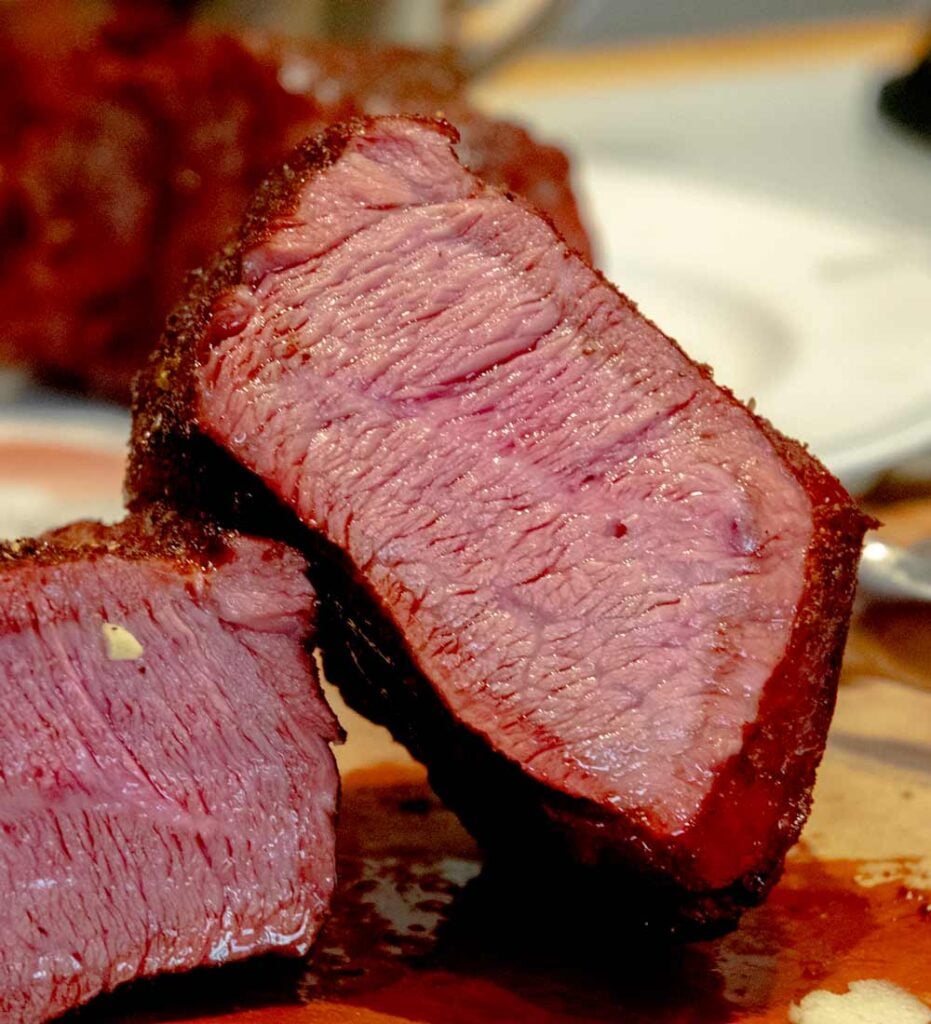
Mesquite is my favorite smoking wood for beef because it adds a little spiciness and gives it a smoke flavor that makes it taste like it was cooked over a campfire. Oak, hickory, or a combination of the three is a good pairing for beef’s deep, savory flavors.
When using herbs such as rosemary, thyme, and sage, use lighter wood, such as apple, maple, or pecan. The lighter smoke flavor and sweetness of fruit wood complement the flavors of the herbs.
Smoked Beef Time and Temperatures
Making smoked beef taste delicious requires a combination of time and temperature. Good temperature control involves controlling the smoking temperature so the meat reaches the right internal temperature at the right time.
I generally take smoked meat out of the smoker at a slightly higher temperature than meat cooked in the oven or on the grill because the lower cooking temperature means less carryover heat.
Smoked Beef Time & Temperature Guide
|
Cut of Beef |
Temperature |
Time |
|---|---|---|
|
Beef Roasts (Top Round, Bottom, Round, Sirloin Tip, Tri-Tip) |
Smoking temperature of 225℉ (107℃) Internal temp 135℉ (57℃) to 140°F (60℃) for medium to medium-rare |
30 to 35 minutes per pound at 225℉ (107℃). |
|
Prime Rib, Ribeye Roast, Tenderloins |
Smoking temperature of 225℉ (107℃) to 250℉ (121℃) Internal temp 135℉ (57℃) and 140°F (60℃) for medium to medium-rare |
35 to 40 minutes per pound |
|
Brisket |
Smoking temperature of 225℉ (107℃) Internal temperature is between 195℉ (91℃) and 205℉ (96℃) |
1.5 to 2 hours per pound |
|
Chuck Roast |
Smoking temperature of 225℉ (107℃) to 250℉ (121℃) Internal temperature for serving sliced is 195℉ (91℃) to 200℉ (93℃) Internal temperature for pulled or shredded should be closer to 205℉ (96℃) before the meat easily pulls apart |
2 hours per pound at 225℉ (107℃) 1.5 hours per pound at 250℉ (121℃). |
|
Beef Ribs |
Smoking temperature of 250℉ (121℃) to 275℉ (135℃) Internal temperature is between 205℉ (96℃) and 210℉ (90℃). |
8 to 10 hours |
|
Steaks (Ribeye, Flank, NY Strip, etc.) |
Smoking temperature of 225℉ (107℃) Smoke the steak until it is 10 degrees below the target temperature, then use a reverse sear to finish it over high heat on a grill or stovetop. |
Around 1 hour for 1 ½ inch thick steaks. |
Best Cuts of Beef to Smoke
When you’re looking for smoked beef recipes and deciding which cuts of beef to smoke, ask yourself the following questions.
- How much time do you have?
- How many people are you serving?
- How will the beef be served? Will it be served tableside, pulled or shredded, sauced, in sandwiches, tacos, or rice bowls?
- How much do you want to spend? Per person?
- Are you smoking a roast for Christmas or as something to warm up for weeknight dinners?
Thinking about these questions will help you choose the right cut for any occasion. Read the Complete Guide to Cuts of Beef for more information on different cuts.
Smoked Chuck Roast
Smoking a chuck roast is a simple way to smoke beef similar in flavor and texture to brisket without having to go through the process of smoking a full-size brisket for 12 to 18 hours.
Chuck roasts are generally smoked at 225℉ (107℃) for 2 hours per pound or 1.5 hours per pound at 250℉ (121℃). They should be rested for at least 30 minutes and wrapped in pink butcher paper or aluminum foil.
There are two main approaches to smoking chuck roasts. The first is to smoke it like brisket, where it’s seasoned, smoked, and served cut into long, thin slices against the grain. The target internal temperature for chuck roast served in thin slices is 195℉ (91℃) to 200℉ (93℃).
The second is to smoke it until the meat is so tender it falls apart to the touch. This is the best way to make shredded beef. For chuck roasts that will be pulled or shredded, the internal temperature needs to be closer to 205℉ (96℃) before the meat easily pulls apart.
Southwestern Smoked Chuck Roast

Smoking Beef Brisket
The granddaddy of smoked beef is whole brisket. A brisket is a primal cut from the chest area and is often divided into two sections, called the point and the flat.
In some parts of the country, namely Texas, smoking brisket borders on a religion, similar to smoked pork ribs or whole hog in parts of the Southeast.
Smoking a whole brisket is not for the faint of heart. Often referred to as a packer’s cut, whole briskets generally range between 12 to 14 lbs and take 12 to 18 hours to smoke, with most recipes calling for wrapping the brisket in pink butcher paper halfway through to help it get through the stall.
The majority of smoked brisket recipes recommend smoking until the internal temperature is between 195℉ (91℃) and 205℉ (96℃), with 203℉ (95℃) being the magic number. Many experienced pitmasters rest their brisket wrapped in butcher paper in an insulated cooler for an hour to conserve the heat before slicing.
Try our Sous Vide Brisket recipe for a different take on cooking a smaller piece of brisket.
Beef Roasts
Beef roasts can be divided into two groups. The roast beef cuts consist of eye of round, top round, tri-tip, and rump roasts. They are usually served the same way roast beef is: sliced relatively thin and used as a main course or for sandwiches.
These cuts are relatively lean, economical, and often available at grocery stores and butcher shops in the 2 to 5 lb range. They are best smoked low and slow over a water pan to keep them tender and juicy. The lack of fat and connective tissue means they dry out easily if overcooked.
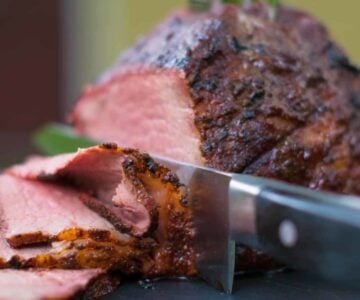
For a medium to medium-rare beef roast, smoke it until the internal temperature is between 135℉ (57℃) and 140°F (60℃). Once the roast comes to temperature, remove it and rest wrapped in pink butcher paper or tented under aluminum foil for 20 to 30 minutes before slicing.
Beef roasts generally take 30 to 35 minutes per pound using a smoking temperature of 225℉ (107℃).
Smoked Beef Roast

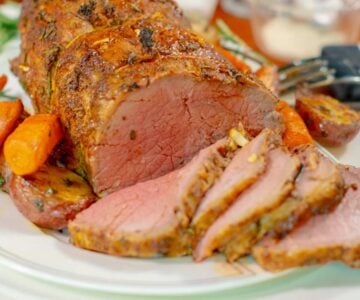
The second group includes special occasion roasts, such as prime rib, ribeye roast, and beef tenderloin. These special cuts can cost a lot but deliver a wow factor, especially when carved tableside.
Since a whole prime rib, including ribs, can weigh up to 30 lbs, it is almost always broken down into smaller cuts, often labeled as prime rib, rib roast, standing rib roast, or ribeye roast. In this case, the term prime refers to a large piece of beef coming from the primal rib and not the grade of the beef.
Since it is often prepared and served in large, thick slices, a well-seasoned crisp crust helps create a contrast in flavor and texture to the well-marbled interior, elevating the dish’s overall flavor.
When you’re serving a large roast to many people, it’s a good idea to ask about their preferences. Almost every dinner party has at least one person who would like their piece to still moo while someone else prefers theirs to be cooked to the consistency of a hockey puck.
Once you know your guests’ preferences, find a middle ground and serve those who like their beef more well done with the outside slices and those who prefer it closer to medium or medium rare from the center.
For a medium-rare roast, remove it when the internal temperature is between 132℉ (55℃) and 137℉ (58℃). The recommended time and temperature for smoking a ribeye roast at 225℉ (107℃) is 35 to 40 minutes per pound plus 30 minutes of resting.
Smoked Beef Ribs
The best way to smoke beef ribs is low and slow until the meat starts to fall off the bone. Beef ribs come in various cuts and styles, so choosing the right type is critical. If there’s not enough meat on the bone, a long smoke will turn them into stringy jerky.
Ribs for smoking should have 1 to 2 inches of meat. Two of the most popular choices, known for having a lot of meat on the bone, are beef back and beef chuck ribs.
Beef ribs should be smoked at 250℉ (121℃) to 275℉ (135℃) until their internal temperature is between 205℉ (96℃) and 210℉ (90℃). A tip to tell the ribs are done is when the temperature probe slides in with little to no resistance.
Similar to pork ribs, beef ribs contain a lot of connective tissue that can take a long time to break down. To help the ribs cook faster, some recipes call for them to be wrapped in pink butcher paper for several hours towards the end of the smoking process. However, wrapping the ribs can impede the development of a crisp bark. The bark is the lovely, crispy exterior highly prized among barbecue aficionados.
Once the ribs have reached temperature, they should be removed, wrapped in butcher paper, and rested for 30 to 60 minutes before being sliced and served.
Smoking Steaks

A simple way to impart your favorite steaks with a nice smokey flavor is to smoke them.
Cuts of steak that smoke well include ribeye, porterhouse, and NY strip steaks that are around 1 ½ inches thick. They usually take around an hour to cook, including time in the smoker and grill. Thinner, more fibrous cuts such as flank steak also work but need to be watched so they don’t dry out.
The most popular way to smoke steaks is to use the reverse sear method, where the meat is seasoned and smoked in a 225℉ (107℃) smoker until it’s 10 degrees under its desired serving temperature. The steak is removed from the smoker and finished over high heat on a grill or stovetop.
For a medium-rare steak, this means smoking it until it reaches 125℉ (52℃) and then finishing it on the grill or stovetop over high heat until the internal temperature is 2 to 5 degrees below its serving temperature. The steak will reach its serving temperature while it rests.
Let the steak rest tented under aluminum foil for 5 to 10 minutes to reabsorb its juices before slicing and serving.
Another way to add smoke flavor to steaks is to grill them over an open fire.
Smoking Ground Beef

There are several ways to add a smokey flavor to ground beef dishes. This Smokehouse Chili recipe uses a stovetop smoker to lightly smoke sirloin roast and chuck roast to give the chili a deep, smokey flavor.
The smoke adds a much deeper flavor profile to the chili than liquid smoke or smoked paprika can do. Smoking the ground beef doesn’t add much time and can be done while the rest of the ingredients are prepped.
Other popular choices include smoked meatloaf and smoking hamburgers, which have become popular with the rise of grills that function as both grills and smokers.
Check out our smoking section for more recipes, tips, and tricks.
Mark is an experienced food writer, recipe developer, and photographer who is also Umami’s publisher and CEO. A passionate cook who loves to cook for friends, he can often be found in the kitchen or by the grill testing new recipes.
More Info About Mark Hinds
Learn More
Find more recipes, tips, and ideas about these techniques, ingredients, and cuisines.
Techniques:
Ingredients:
Cuisines:




Leave a Reply