Smoked Beef Roast


When you take the time to make a smoked beef roast you’re rewarded with scrumptious roast beef that is tender and juicy with deep, smokey flavors.
Smoking a beef roast concentrates its flavors while creating a visually stunning roast that can take center stage at a dinner party, a backyard barbecue, or for a week of repeat performances as the star of mouthwatering roast beef sandwiches.
There are many different cuts of beef to choose from and different ways to smoke beef roasts. This smoked beef roast recipe focuses on leaner, more affordable cuts such as eye of round, tri-tip, and sirloin roasts.
Smoking Beef Roasts
The best cuts of meat for smoked roast beef are taken from the hindquarters and are relatively lean and economical. We refer to this group as the roast beef cuts because they are usually served the same way roast beef is served, sliced relatively thin deli style for sandwiches or as thicker slices as a main course. This group includes eye of round, top round, bottom round, and tri-tip roasts.

They are often available at grocery stores and butcher shops in the two to five pound range. Smoking them low and slow keeps them tender and juicy. A lack of fat and connective tissue means these cuts dry out if overcooked.
When choosing roasts for smoking, the meat should always appear fresh, slightly slick without appearing wet, and have a deep reddish color. Avoid pieces with lots of brown or have an off-putting smell. The more marbling, the more flavor.
Go with high-quality cuts graded Prime or Choice that fit within your budget and occasion. In other words, don’t make prime rib for your kids’ school lunches. Our favorite cut of beef to smoke is eye of round.
For a medium to medium-rare smoked beef roast, we recommend smoking it until the internal temperature is between 137℉ (58℃) and 142°F (61℃).

These types of roasts generally take 30 to 35 minutes per pound using a smoking temperature of 225℉ (107℃). Once the roast reaches its target temperature, it should be removed from the smoker and allowed to rest tented under aluminum foil for 20 to 30 minutes.
Seasoning Smoked Beef
These types of roasts can be seasoned in a million different ways. We love to use herbs and spices traditionally used to make roast beef. This recipe uses a simple spice rub that includes smoked paprika, garlic & onion powders, kosher salt, and black pepper to develop a deep smokey flavor.

Our Slow Roasted, Mouthwatering, Tender Roast Beef recipe includes additional information on classic flavors and techniques for cooking a roast in the oven.
Alternative Seasonings
Here are a few different ways to season smoked beef. Coating a roast with olive oil, garlic, rosemary, and thyme creates an herb forward crust that is delicious as a main course served with mashed potatoes and roasted vegetables on the side.
When smoking a roast for a barbecue, use a combination of ancho chili, chipotle, cumin, and garlic powder for the dry rub. This version makes scrumptious sliders topped with lightly pickled red onion, pepper jack cheese, and Ancho Chili and Honey Barbecue Sauce.
Since beef excels at absorbing the flavors from smoking, the choice of wood matters. We prefer woods with bolder, heartier flavors, like hickory, oak, and mesquite, which infuse their flavors deep into the meat.
How to Smoke a Beef Roast
There’s a lot to love about smoking a beef roast, how it absorbs the flavors from the smoke, how the aroma of smokey barbecue wafting through the neighborhood makes your neighbors jealous, and how it makes the flavors pop.
These cuts of meat tend to be lean, with very little excess fat on the outside. When it comes to trimming, the only thing we remove is any extra silver skin or the occasional loose bit.
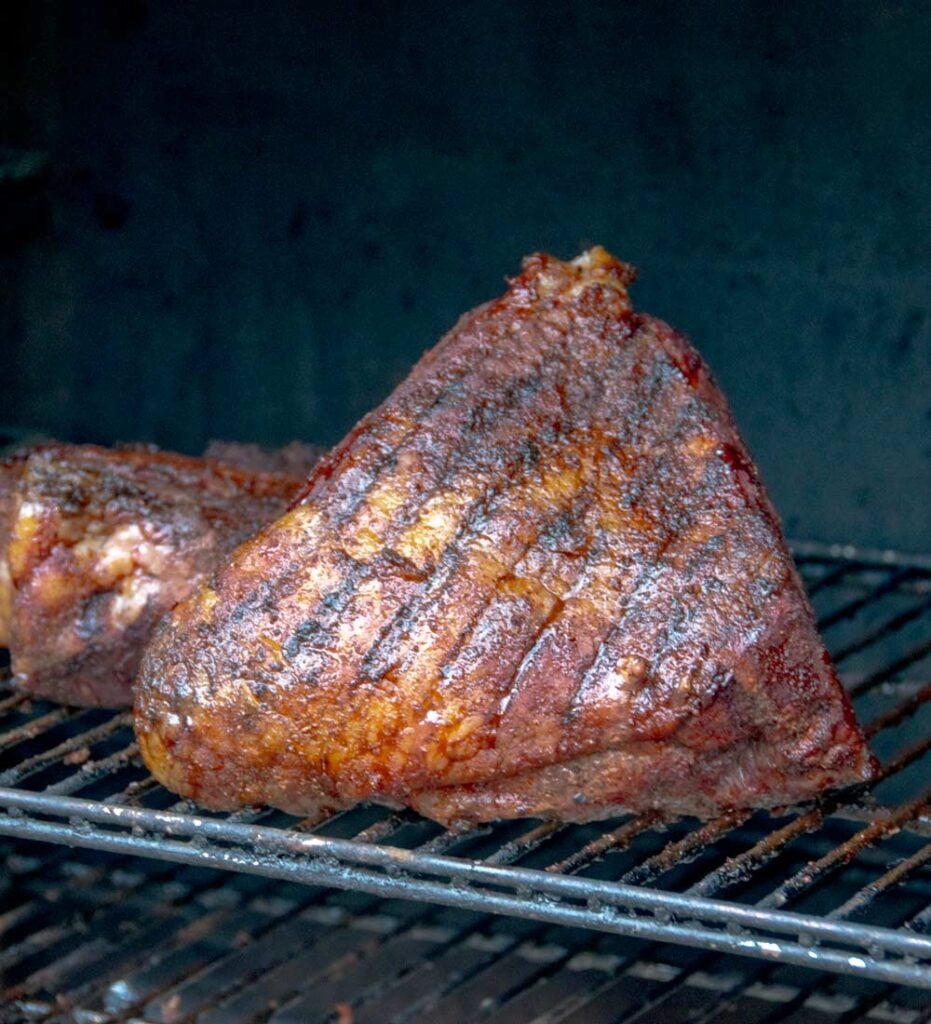
When choosing a roast try and pick ones that are longer than they are wide. This helps ensure each slice has a bit of crisp, flavorful crust and a tender, juicy middle.
Trussing the roast to help create a more uniform shape is optional. We recommend trussing only if the roast will fall apart during cooking or if it will make it easier to slice when it’s finished.
Roasts can be seasoned up to a day in advance. Some people like to brine roasts. We haven’t found brining to make a difference in flavor or texture.
Rubbing the outside of the roasts with Worcestershire sauce helps the spice rub adhere to the roast and add a little more umami flavor.
How to Keep Smoked Beef Roasts Tender and Juicy
The key to juicy meat is temperature control. If the smoker or grill doesn’t include a water pan, adding one can help add moisture and balance the temperature.
This recipe can be used with any smoker. If the roast is smoked on a gas or charcoal grill, use indirect heat to cook the meat without drying it out or turning the outside into a briquette. We recommend leaving any fat on the outside to let the roast baste itself.

A key to keeping roasts juicy is to allow them to rest for 20 to 30 minutes after coming out of the smoker. This allows the meat to reabsorb its juices. If a roast is sliced too quickly, the juices will run onto the cutting board and be lost. To ensure it doesn’t cool too quickly, tent it in aluminum foil while resting.
How to Tell When a Roast is Done
Some differences exist between smoked roasts and those that are slow-roasted in the oven or cooked sous vide.
In our testing, we’ve found that smoking a roast takes 30 to 35 minutes per pound and that the roast should be removed from the smoker when its internal temperature reaches between 137℉ (58℃) and 142°F (61℃), depending on its size and the desired level of doneness.
We smoke roasts to a slightly higher temperature than those cooked in the oven because the lower temperature in the smoker means it takes longer for the roast to cook through, and it will have less carryover cooking than one roasted in the oven.
We recommend using a digital thermometer with one probe inserted into the middle of the roast and another sitting next to it to read the smoking temperature accurately.

If you don’t have all day, you can smoke a roast between 250℉ (121℃) and 275℉ (135℃), and it will still be delicious; it just won’t be quite as tender as one cooked at a lower temperature.
The following temperature guide is for beef roasts and steaks. Smoked chuck roasts and beef brisket require higher temperatures and slightly different techniques.
Temperature Guide
| Doneness | Description | Temperature Range |
|---|---|---|
| Very Rare | Very red, bloody, and cold | Below 125℉ (52℃) |
| Rare | Cold red center & soft to the touch | 125℉ (52℃) to 134℉ (56℃) |
| Medium Rare | Warm red center, firmer with a bit of spring | 135℉ (57℃) to 144℉ (62℃) |
| Medium | Pink all the way through & firm to the touch | 145℉ (63℃) to 155℉ (68℃) |
| Well Done | Gray and brown all the way through, very firm | 156℉ (69℃) to 165℉ (74℃) |
| Way Over Done | Dark and crusty inside and out | 166℉ (74℃) plus |
Smoking Tips
Here are a few tips for smoking a roast with bold flavors and a texture so sublime you can cut it with a fork.
Rubbing the outside of the roast with Worcestershire sauce enhances the beef’s natural umami flavor and helps the seasoning stick to the meat.
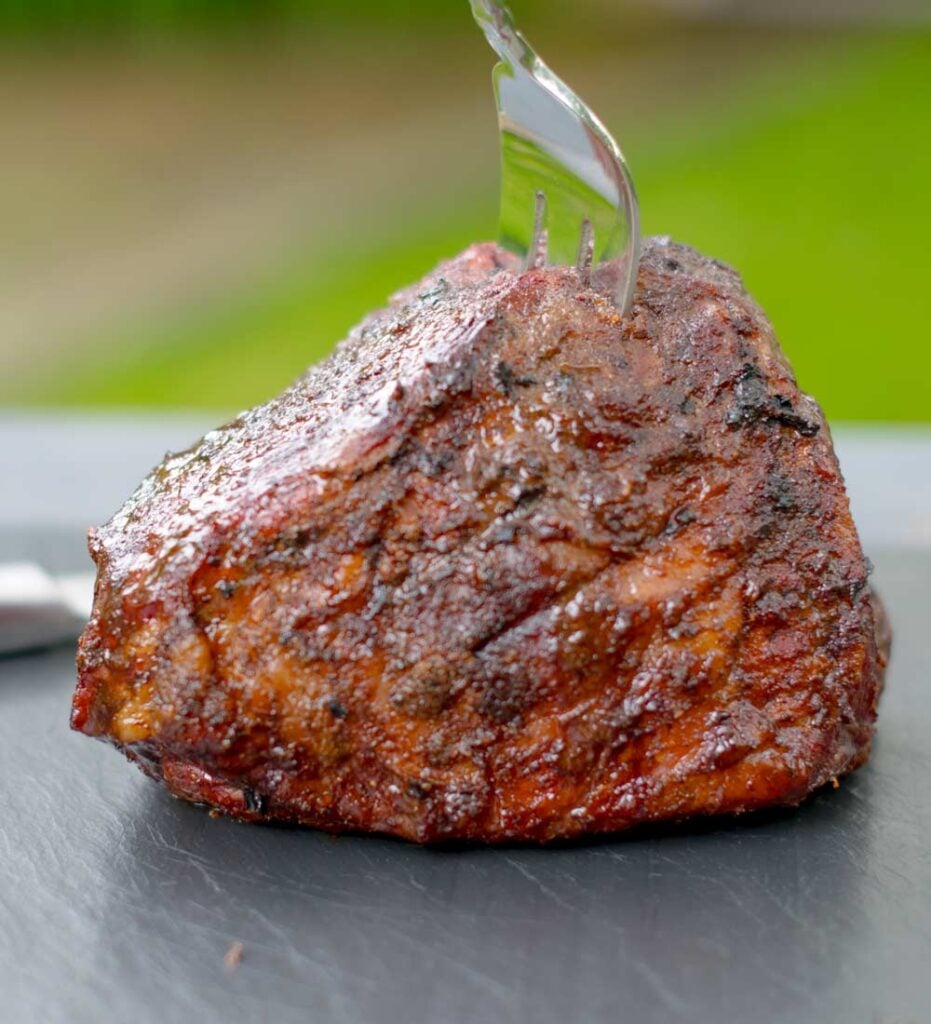
Roasts do not need to be trussed unless there are loose pieces or an irregular shape. Roasts can be placed directly on the grill grate, fat side up, and do not need to be flipped or turned.
To avoid drying the beef out, stay away from high temperatures or leaving the roast in the smoker for too long.
Roast beef and rib roasts will develop a nice crust on the outside, especially when liberally seasoned, but it won’t be as thick as the ones on fattier cuts.
Regarding bark or that crisp crust that develops on the outside of large cuts of meat when smoked, the additional fat and longer smoke times make it easier for smoked chuck roasts and briskets to develop the thick, crispy bark candy that barbecue aficionados love to rave about.
What makes the roast beef cuts stand out is the combination of flavor and texture when sliced against the grain, and each slice includes a bit of the flavor packed crust and juicy center.
Serving Ideas, Side Dishes, & Sauces
Here are a few of our favorite side dishes to serve with a smoked roast. If the roast is served as a main dish with thick slices, make a silky smooth beef gravy or some au jus.
When serving a roast for a nice dinner, pair it with crispy, herb-laden Roasted Fingerling Potatoes, some Creamy Mac and Cheese, or homemade Creamed Corn.
A great way to serve smoked beef at parties is to slice it very thin, sprinkle it with a small amount of smoked salt, and serve it on a meat and cheese platter.
We often smoke a roast on the weekend to make delicious French Dip Sandwiches all week. Slice the roast thin whenever you want a sandwich, and heat it in the oven while the bun is toasting. Serve it with creamy horseradish and a little dish of au jus for dipping.

When using this recipe for sandwiches, serve it with some Smokehouse Potato Salad, Grilled Corn on the Cob, and Quick Pickled Carrots.
Storing and Reheating
Smoked beef can be stored in an airtight container in the fridge for a week or so and then sliced whenever someone gets hungry.
We recommend reheating the roast in a 300℉ (149℃) oven in a covered baking dish for 10 to 15 minutes, depending on the size of the leftovers. Thin slices don’t take as much time as a large hunk. We don’t recommend using a microwave to reheat it unless you’re a fan of chewing on rubber.
Roasts can be frozen for 3 to 6 months and defrosted in the refrigerator before being warmed in the oven.
No matter how you’re serving it, slice the roast against the grain and sprinkle a tiny bit of salt on the beef right before serving. The salt helps bring out the beef’s natural flavors, elevating the taste of the final dish.
For a deep dive into other cuts of beef and smoking methods, read Tips and Tricks for the Best Beef to Smoke.

Smoked Beef Roast
Ingredients
- 3 lb beef roast, eye of round, rump, sirloin tip, top round, or bottom round
- 1 tsp smoked paprika
- 1 tsp garlic powder
- 1/2 tsp onion powder
- 1 1/2 tsp Kosher salt
- 1 tsp black pepper
- 1 tbsp Worcestershire sauce, Enough to rub down roast
Instructions
- Make the dry rub by mixing the salt, pepper, smoked paprika, garlic, and onion powders.1 tsp smoked paprika, 1 tsp garlic powder, 1/2 tsp onion powder, 1 1/2 tsp Kosher salt, 1 tsp black pepper
- Before applying the seasoning, give the roast a good rub down with Worcestershire sauce. The Worcestershire helps the rub adhere to the roast and adds flavor.3 lb beef roast, 1 tbsp Worcestershire sauce
- Smoke the roast at 225℉ (107℃) for 30 to 35 minutes per pound. The roast is ready to come out when its internal temperature is between 137℉ (58℃) to 142℉ (61℃) degrees.
- Let the roast rest for 20 to 30 minutes, covered with foil, before slicing thin. To brighten the beef’s flavors, sprinkle a little salt on the slices before serving them.
Recommended Equipment


Mark is an experienced food writer, recipe developer, and photographer who is also Umami’s publisher and CEO. A passionate cook who loves to cook for friends, he can often be found in the kitchen or by the grill testing new recipes.
More Info About Mark Hinds
Learn More
Find more recipes, tips, and ideas about these techniques, ingredients, and cuisines.



Leave a Reply