How to Smoke a Whole Chicken

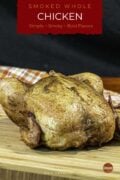
Learning how to smoke a whole chicken is a simple way to cook tender and juicy chicken with a nice smoky flavor.
What makes smoking whole chickens so special is how easy it is to build layers of flavor and the countless ways the chicken can be used. Many a smoked chicken has started as the center of a meal, been eaten as leftovers, and used as an ingredient in other dishes.
In this piece, you’ll learn how to smoke a chicken with succulent meat that pairs a light smokiness with rich Southwestern flavors. What makes this recipe stand out is how we use the seasoning to flavor the whole chicken inside and out, not just the skin.
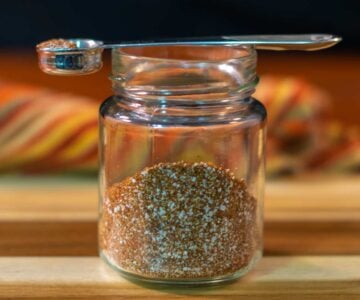
This smoked whole chicken recipe uses our Southwest Spice Blend to build layers of flavor with a unique combination of spices, chilies, and herbs. The flavors include a light to medium smoke, with ancho chili, chipotle peppers, and cumin providing notes of sun dried chilies and a bit of bite, with Mexican Oregano rounding out the edges.
We also have time and temperature recommendations, delicious side dishes, and ideas for using smoked chicken in other dishes.
Smoking a Whole Chicken
Learning to smoke a whole chicken is a simple way to add a light smoke flavor that gives the chicken an extra dimension compared to a rotisserie or oven roasted chicken.
One of the best things about smoking whole chickens is that they include all the different cuts (breast, thigh, leg, and wing) in a tidy package that lets people mix and match their favorite cuts for just the right chicken dinner.
We also have more Helpful Tips for Smoking Chicken that include additional time & temp recomendations, seasoning ideas, and tips for crispy skin.

Building Flavors for Delicious Smoked Chicken
The secret to making whole chickens tasty is to get under the bird’s skin and season the meat.
Building flavors in whole chickens can be a challenge. Applying dry rubs to the outside makes the skin taste great, but doesn’t do much for the meat underneath.
Some common approaches to overcoming this are to brine the bird or use a syringe to inject it with a flavored solution. In our experience, both techniques create a lot of extra work for very little reward and can change the meat’s texture.
A more effective approach is to get the seasoning under the chicken’s skin using a sharp knife and your fingers to lightly loosen the skin and spread the seasoning underneath.

For the area around the breasts, slide your forefinger under the skin to slightly separate it from the meat. The skin doesn’t have to be very loose, just enough to slide a finger underneath and spread the seasoning across the breast.
For the thigh and leg area use a sharp knife to cut a small slit in the skin to create an opening large enough for a finger or two to slide in and spread the dry rub under the skin and into the nooks and crannies. Spread the seasoning on the inside of the cavity to help flavor the bird while it cooks.
There is a night and day difference in flavor between chickens seasoned under the skin compared to those only seasoned on the outside. Getting the seasoning under the skin is the same technique we use with fresh herbs to deliver a stunning Smoked Turkey.
Smoking a Whole Chicken
One of the most frequently asked questions about smoking chicken is how to make sure the meat comes out tender and juicy. A lot of recipes recommend brining or injecting the chicken before smoking, and while these techniques will increase the amount of liquid in the bird, we don’t recommend them.
We’ve found through testing that brining, while helpful on small thin cuts, doesn’t do much for larger cuts or whole birds, but does take a lot of extra time and can be messy.
The secret to smoking a whole chicken so the meat is juicy is cooking it to the right temperature, not how much liquid you can pump into it.

Prepping the Chicken
Getting the chicken ready for the smoker is relatively simple. Start by picking a high quality bird. This recipe works best with a fryer or roasting chicken that is at least 4 lbs. When available, use roasters that are 5 to 7 lbs.
The terms broiler, fryer, and roaster are used somewhat interchangeably, but generally refer to the size and age of the chicken. For a chicken to be considered a roaster, it must be over 5 lbs and of a certain age (FDA). Since whole chickens that are smoked are generally served whole and make delicious leftovers, we typically go with larger birds and will sometimes smoke an extra chicken to have leftovers.
A tip when comparing chickens at the grocery store is to take into account how much of the packaged weight is liquid. We generally try to avoid cuts that have been injected or have high amounts of liquid, which is often a sign of lower quality and why they are often cheaper.
More Smoked Chicken Recipes


Before seasoning, remove the giblets, give the chicken a good wash under cold water, and pat dry with a paper towel.
To season the bird, make a couple of small incisions between the breasts and thighs. Rub the outside of the bird with the lemon juice and olive oil to add flavor and help the spices adhere. Then spread the seasoning under the skin, inside the cavity, and on the outside of the skin. To help keep the chicken moist, stuff the cavity with some diced apple.
An optional step is to truss the bird. The advantage of trussing a whole chicken is that it makes it more compact, helping it cook evenly.
Time and Temperature Recommendations
The best way to answer “how long does it take to smoke a whole chicken?” is around 2 hours at 250℉ (121℃). A much better way than using time is to use a wireless thermometer to cook the chicken to 165℉ (74℃) in the thickest part of the breast and 175℉ (79℃) in the thigh.

Smoking the chicken to a specific temperature rather than for a certain amount of time takes into account the size of the chicken, different types of smokers, and other conditions. Living in Minnesota, I’m always amazed at how much longer it takes to smoke something in January than in July.
Using a wireless meat thermometer with multiple probes makes it easy to smoke the chicken to a specific temperature. Insert one probe into the thickest part of the breast and set another near the chicken to monitor the temperature. An advantage of wireless thermometers and probes is that you can set them and go about your day while using your phone to keep tabs on what’s being cooked.
The chicken should be smoked at 250℉ (121℃) until the thickest part of the breast reaches at least 163℉ (73℃). This produces deeply flavored chicken with juicy meat that is cooked all the way through.
While developing this recipe, we tried smoking chickens at both 225℉ (107℃) and 275℉ (135℃) and found that the ones smoked at higher temperatures were slightly drier but still fine, and that 225℉ (107℃) added additional time without adding a noticeable amount of flavor or texture.
Adjusting for Carryover Cooking
The reason we smoke the chicken until it’s at or just about to the FDA’s recommended 165℉ (74℃) temperature is that there is a lot of poor information about whole chickens and carryover cooking. Many recipes recommend taking the chicken off at temperatures five to ten degrees below 165℉ (74℃), claiming it will continue to cook and come to temperature while it rests.

To test how much carryover cooking actually happens, we left the probe for the thermometer in our test chickens while they rested. On average, the internal temperature rose 1 to 3 degrees while the chicken rested with most of the increase coming in the first few minutes. The temperature usually started to decline slowly after 15 minutes.
This matters because if you take a chicken off at 155℉ (68℃) and expect the temperature to rise 10 degrees, and it only goes up a few degrees, you can end up with an undercooked bird.
Resting the chicken for 15 to 20 minutes, tented under foil, allows the meat to reabsorb its juices, which is vital for how the chicken tastes on the plate. An easy and regretful way to tell a chicken hasn’t rested long enough is when it is carved and all its scrumptious juices run across the cutting board, leaving you with a mess and dried out meat.
Crisping up the Skin
The skin on a smoked whole chicken will never be as crispy as it would be from a hot oven or grill. There are a few ways to deepen the color, crisp up the skin, and make sure it tastes delicious.

Brushing the chicken with melted butter towards the end of the cooking process gives it a deep brown sheen and increases crispiness. This can be done with a silicone basting brush and 1 to 2 tbsp of melted butter applied when the temperature in the breast reaches 150℉ (65℃).
The skin can also be crisped up on a hot grill or under the broiler for a few minutes after the chicken has finished cooking, before it has rested.
A method that didn’t work was to increase the smoker’s temperature at the end of the cooking process. When we tried this technique, it ended up rendering out too much of the fat and liquid as the temperature in the smoker rose to 350℉ (177℃), creating a tougher and dryer bird.

Smoked Whole Chicken Recipe
Ingredients
- 1 whole chicken, 4 to 6 lbs
- 3 tsp Southwest Spice Blend
- 1 tbsp olive oil
- 1/2 tbsp lemon juice
- 1 tbsp butter
- 1/4 apple, diced
Instructions
- Rinse the chicken and pat it dry. Make sure to remove the gizzards.1 whole chicken

- Make a couple of small incisions in the skin between the bottom of the breasts and thighs.
- Use your fingers to loosen the skin around the breasts so there is enough room to spread the seasoning between the skin and the meat. Spread the seasoning on the inside of the cavity.3 tsp Southwest Spice Blend

- Combine the lemon juice and olive oil and rub over the outside of the chicken.1 tbsp olive oil, 1/2 tbsp lemon juice
- Stuff the cavity with the diced apple.1/4 apple
- Truss the chicken using kitchen string.

- Smoke the chicken at 250℉ (121℃) for approximately two hours.
- Melt the butter and baste the outside of the chicken when the internal temperature reaches 150℉ (65℃).1 tbsp butter
- The chicken is done when the thickest part of the breast reaches 165℉ (74℃) and the thigh reaches 175℉ (79℃).
- Let the chicken rest tented under foil for 20 minutes before carving.


Notes
Recommended Equipment

What to Make with Smoked Chicken

Making a smoked whole chicken is a simple kitchen flex that can be served as a main course or broken down and used as an ingredient in a range of dishes.
The deep southwest flavor in this chicken makes it ideal for tacos, quesadillas, and burritos. To add complexity and depth to chicken enchiladas, use smoked chicken as a replacement for the shredded chicken in this Chicken Enchilada Recipe.
A simple way to add another dimension and light smoky flavor to dishes is to use smoked chicken in dishes that call for rotisserie chicken.
Side Dishes

The flavors in this smoked whole chicken pair with dishes that have Southwest flavor. A few of our favorites include Mexican Rice, Pinto Beans with Dried Chilies, and Creamed Corn. It’s also delicious with Grilled Sweet Corn when it’s in season.
One of our favorite ways to serve the legs is to remove the entire leg, consisting of the thigh and drumstick, and finish them on a hot grill using the flip, fire, and paint technique with some Ancho Chili and Honey Barbecue Sauce.
Tidbits
The simplest way to store leftover smoked chicken is to carve it into large pieces and store it in an airtight container. Stored this way, it will keep for a week or so.
To reheat the chicken without drying it out, place it in a covered baking dish and cook it for 10 to 15 minutes in a 350℉ (177℃) oven. The amount of time will depend on the quantity of chicken.
Here are more of Our Favorite Smoked Chicken Recipes.

Mark is an experienced food writer, recipe developer, and photographer who is also Umami’s publisher and CEO. A passionate cook who loves to cook for friends, he can often be found in the kitchen or by the grill testing new recipes.
More Info About Mark Hinds
Learn More
Find more recipes, tips, and ideas about these techniques, ingredients, and cuisines.
Ingredients:
Cuisines:
- American
- ·
- BBQ
- ·
- Southwestern



Leave a Reply